Why Rust?
Why Systems Programming Languages Matter
Importance of Systems Languages:
- Essential for building operating systems, databases, and infrastructure
- Provide fine-grained control over system resources
- Enable optimization for performance-critical applications
- Foundation for higher-level languages and frameworks
Performance Advantages:
- Generally compiled languages like Rust are needed to scale to large, efficient deployments
- Can be 10x to 100x faster than equivalent Python code
- Better memory management and resource utilization
- Reduced runtime overhead compared to interpreted languages
Data Science and ML Libraries Written in Rust
- Polars - data processing and analysis library
- tiktoken - tokenization library for OpenAI models
- uv - package manager for Python
- Burn - A PyTorch like alterntive in Rust
- Candle - A minimalist ML framework for Rust
- ...
Memory Safety: A Critical Advantage
What is Memory Safety?
Memory safety prevents common programming errors that can lead to security vulnerabilities:
- Buffer overflows
- Use-after-free errors
- Memory leaks
- Null pointer dereferences
Industry Recognition:
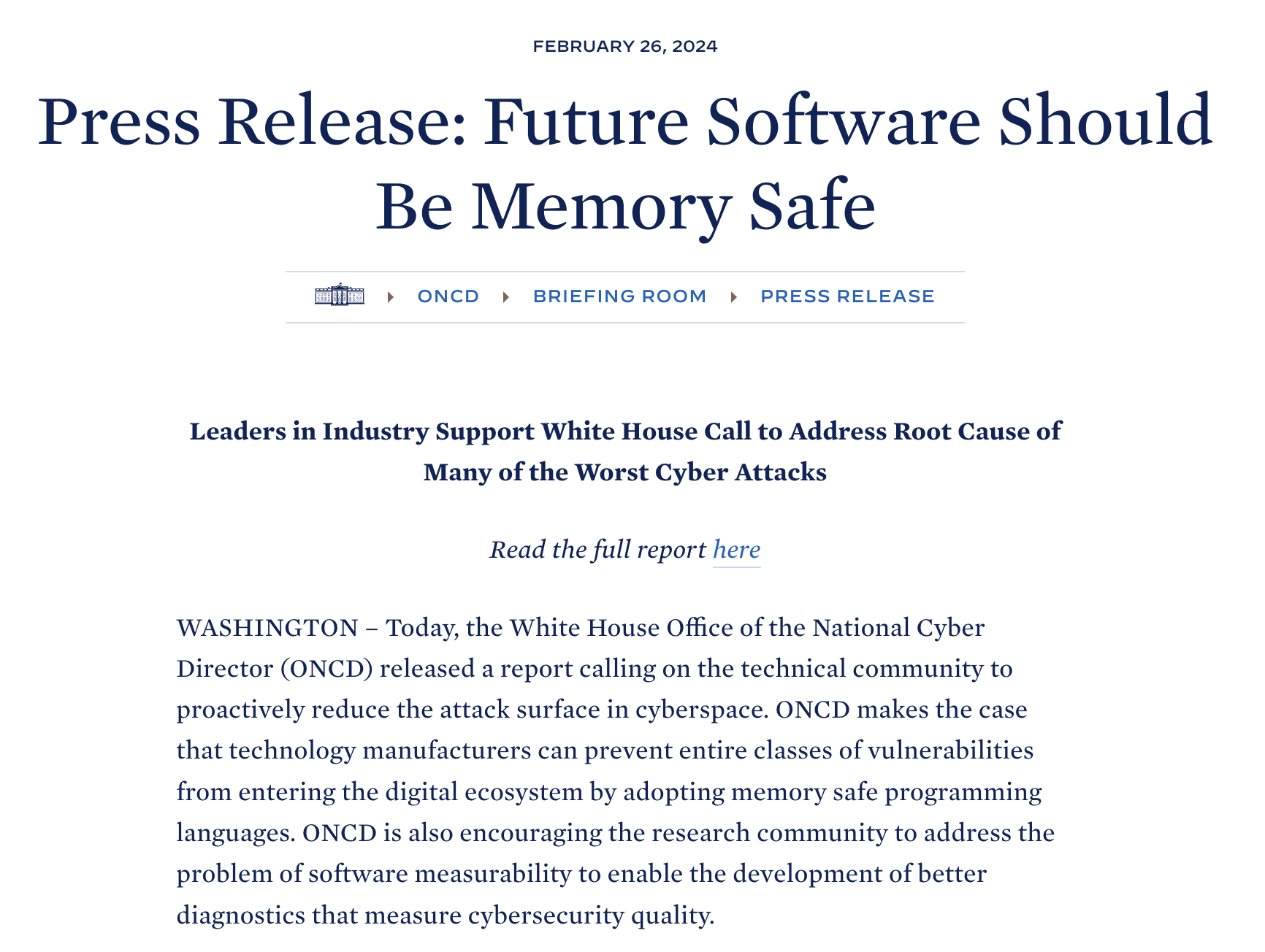
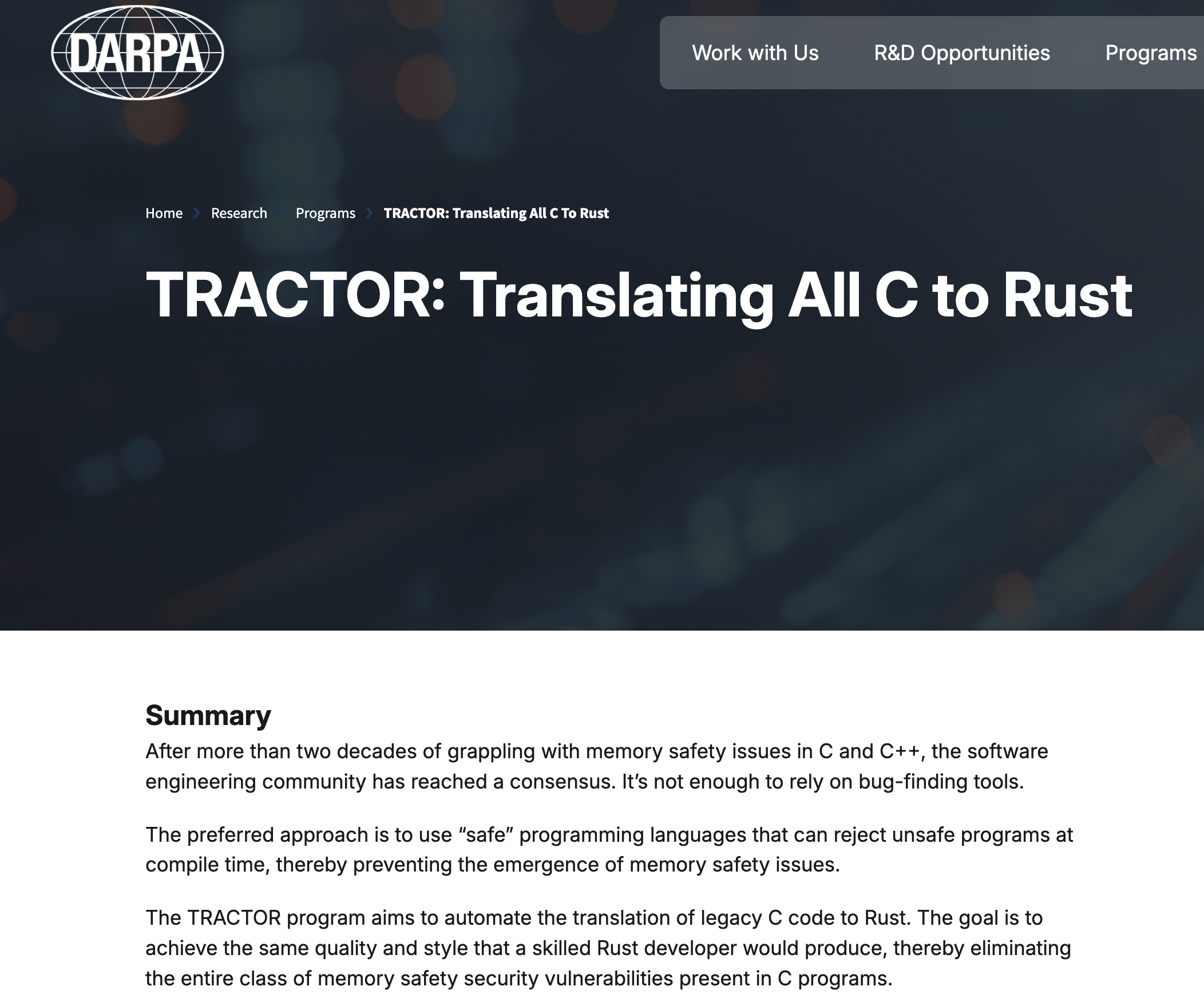
Major technology companies and government agencies are actively moving to memory-safe languages:
- Google, Microsoft, Meta have efforts underway to move infrastructure code from C/C++ to Rust
- ...
White House Press Release
DARPA TRACTOR Program
CISA Recommendation
 CISA -- The case for memory safe roadmaps
CISA -- Cybersecurity and Infrastructure Security Agency
CISA -- The case for memory safe roadmaps
CISA -- Cybersecurity and Infrastructure Security Agency
Programming Paradigms: Interpreted vs. Compiled
Interpreted Languages (e.g., Python):
Advantages:
- Interactive development environment
- Quick iteration and testing
- Rich ecosystem for data science (Jupyter, numpy, pandas)
- Easy to learn and prototype with
Compiled Languages (e.g., Rust):
Advantages:
- Superior performance and efficiency
- Early error detection at compile time
- Optimized machine code generation
- Better for production systems
Development Process:
- Write a program
- Compile it (catch errors early)
- Run and debug optimized code
- Deploy efficient executables
Technical Coding Interviews
And finally...
If you are considering technical coding interviews, they sometimes ask you to solve problems in a language other than python.
Many of the in-class activities and early homework questions will be Leetcode/HackerRank style challenges.
This is good practice!